
Get in touch
Tell me a bit about your project and I'll get back to you by email.
Tell me a bit about your project and I'll get back to you by email.
A policy library that state health officials have to find things in fast — designed and built as my first WordPress site from an empty folder to launch.
Client
State Health and Value Strategies — a Princeton University program, funded by the Robert Wood Johnson Foundation
Agency
Evolving Web — I led the design and build of this project there
Role
Designer and sole developer. Landing pages, all archive and filter templates, full WordPress theme, launch.
With
Nick DeGiorgio — homepage and base section design, which I extended into the rest of the site
Stack
WordPress, custom theme, custom post types and taxonomies, faceted queries, The Events Calendar
Visit
shvs.org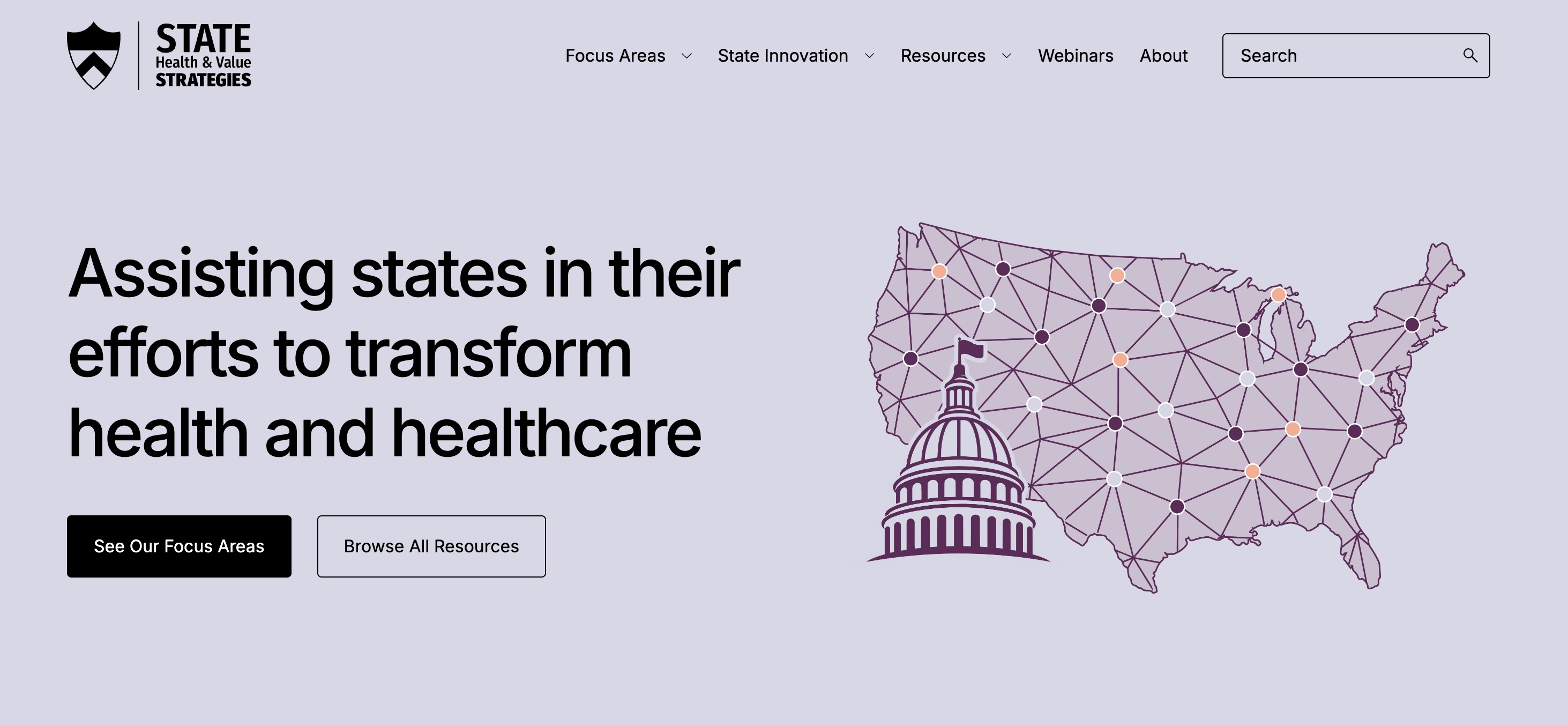
SHVS doesn't need visitors. It needs a state Medicaid director to find the right brief in the ninety seconds before a meeting.
SHVS partners with state officials on a healthcare system that is equitable and accountable to the communities it serves. In practice that means publishing constantly: issue briefs, regulatory analysis, templates, toolkits, monthly state roundups, webinars — all of it arriving faster than federal policy changes.
So this was never a marketing site. It's a reference library with a deadline attached, and the design problem was retrieval, not persuasion.
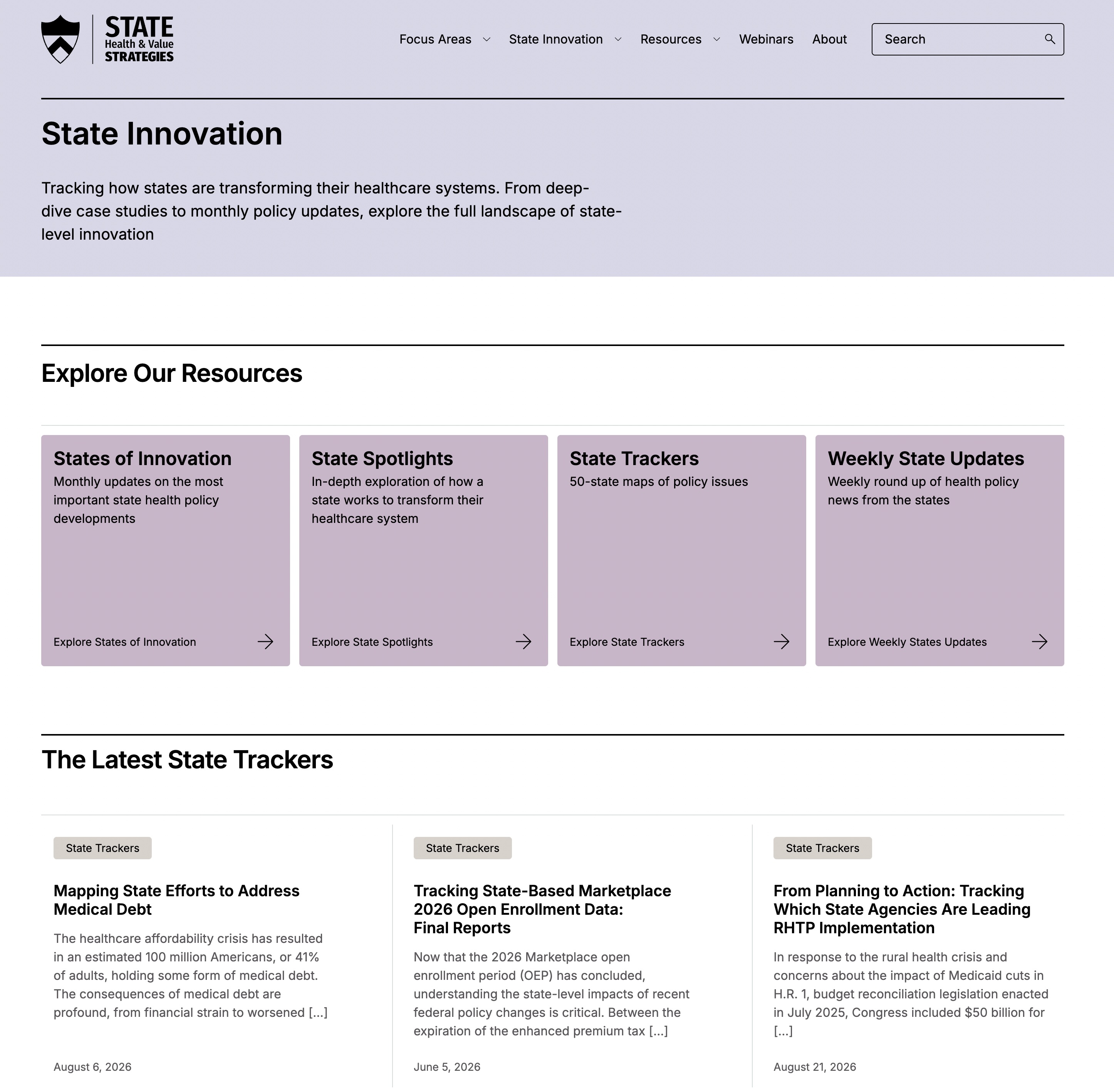
State Innovation landing page — built entirely from the base section vocabulary.
Fig. 02
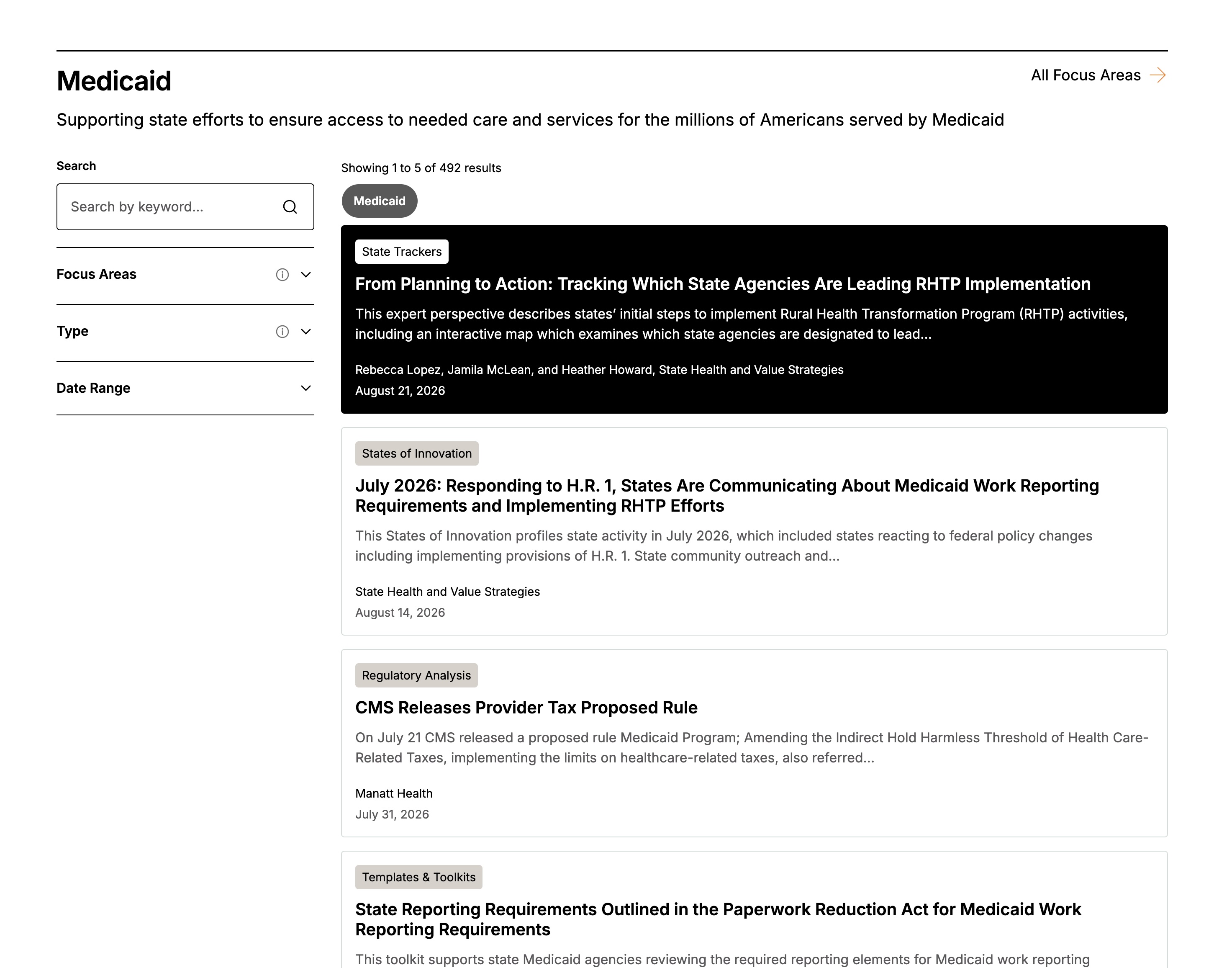
The resources archive. Filter state lives in the URL and survives sharing.
Fig. 03
This was my first WordPress site from an empty folder, and I used AI heavily on the back end. I'd like to be precise about what that means.
The custom post types, taxonomy registrations and query logic were largely AI-generated, then read line by line, corrected and hardened by me. It compressed weeks of unfamiliar boilerplate into days and let me spend that time where it actually mattered: the taxonomy decisions above, the filter behaviour, keyboard order, focus states, and how each template degrades when a field is empty.
What I did not delegate was judgement. The AI never decided what a content type was — that came out of how state officials look for things. It wrote the plumbing; I owned the model.