Get in touch
Tell me a bit about your project and I'll get back to you by email.
Tell me a bit about your project and I'll get back to you by email.
A coffee shop my wife and I designed, built and ran — the only project where I owned every decision and had to live with it the next morning.
Role
Founder, designer, maker. Brand, packaging, menu, furniture, floor plan.
With
Damla Ikiler — co-founder, co-owner
Where
Ayrancı, Ankara — a district with no coffee culture yet
Span
Two years, open daily. Sold as a going concern before we moved to Canada.
A coffee shop is an odd thing to put next to accessibility audits. It's here because it's the clearest evidence of how I work.
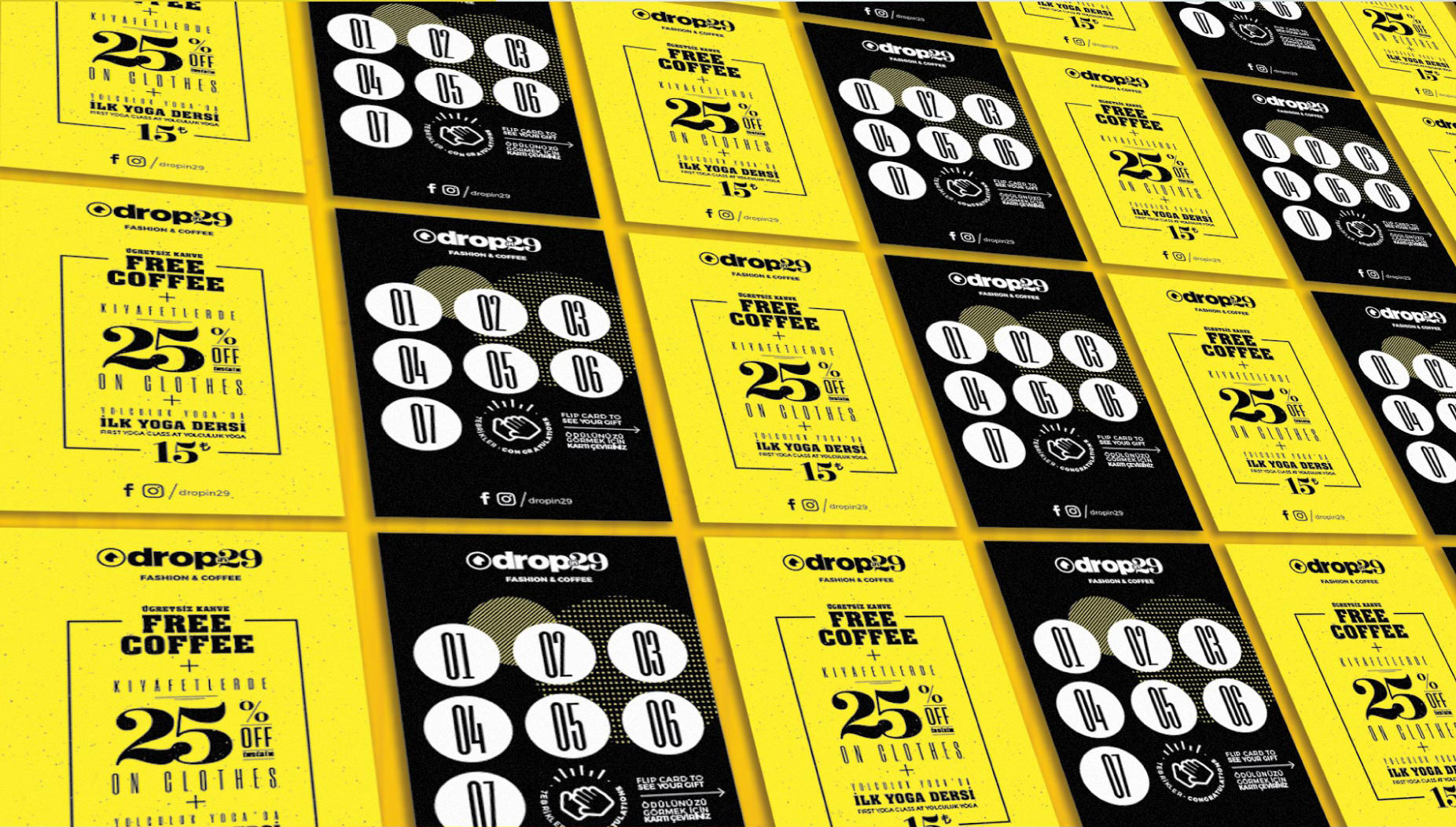
Every other project in my portfolio, I hand off. This one I handed to strangers, hundreds a day, for two years — and got corrected by them constantly. The menu that read fine on screen was unreadable in low light. The counter height that looked right in the drawing was wrong for a wheelchair. The loyalty card people kept losing needed a different shape, not better copy.
Dropin29 is where I learned that a design isn't finished when it looks right — it's finished when it survives daily use by people who owe you nothing.
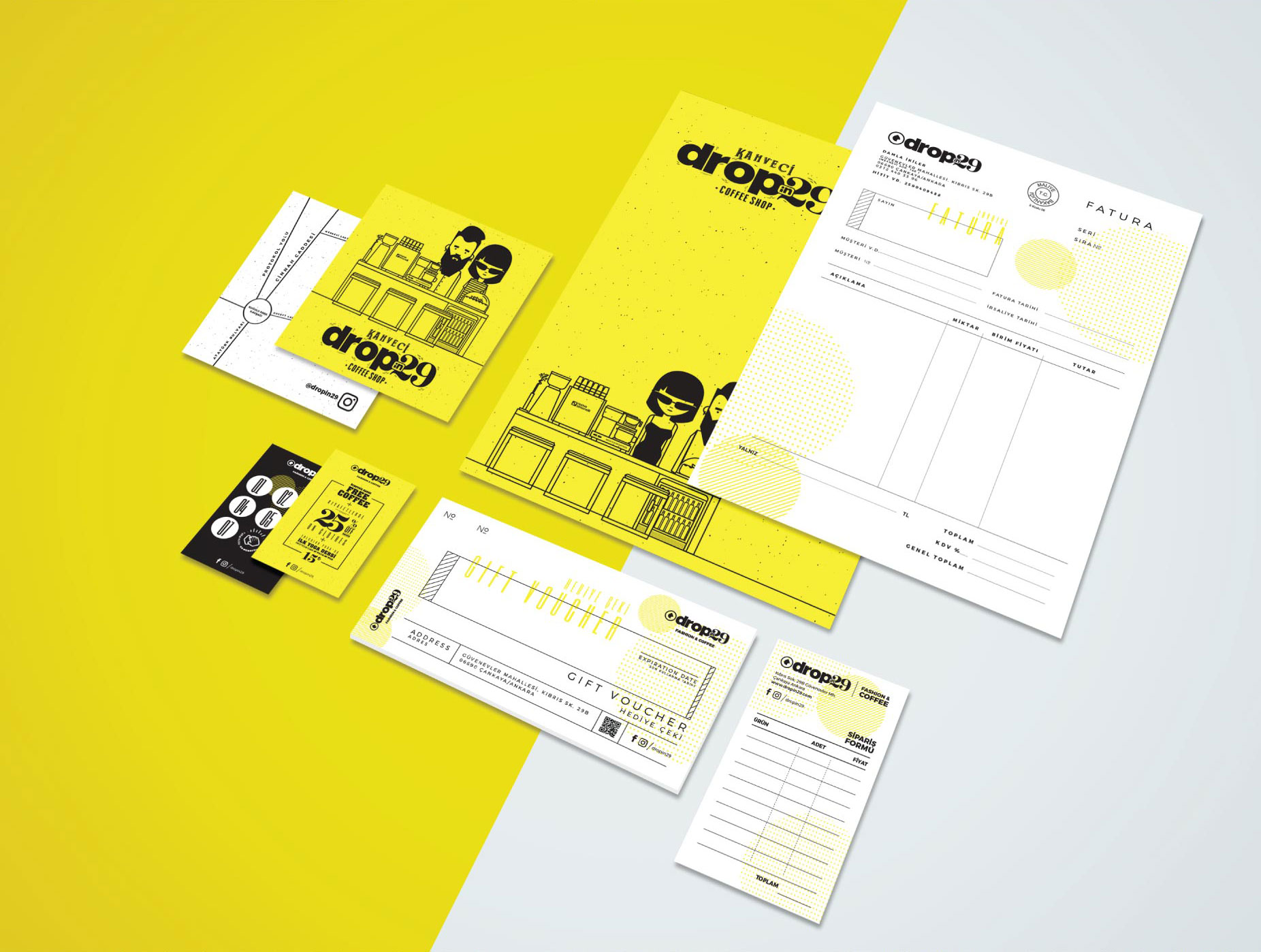
Cards, vouchers, invoices and receipts — the whole set holds together on office paper.
Fig. 01
"People always assumed we hired someone to design Dropin29. It was just us — Fırat built the furniture with his own hands, and every detail, down to the packaging, was something we made together. That's what made it feel like ours, and I think customers could tell."
Damla Ikiler, Dropin29 co-founder
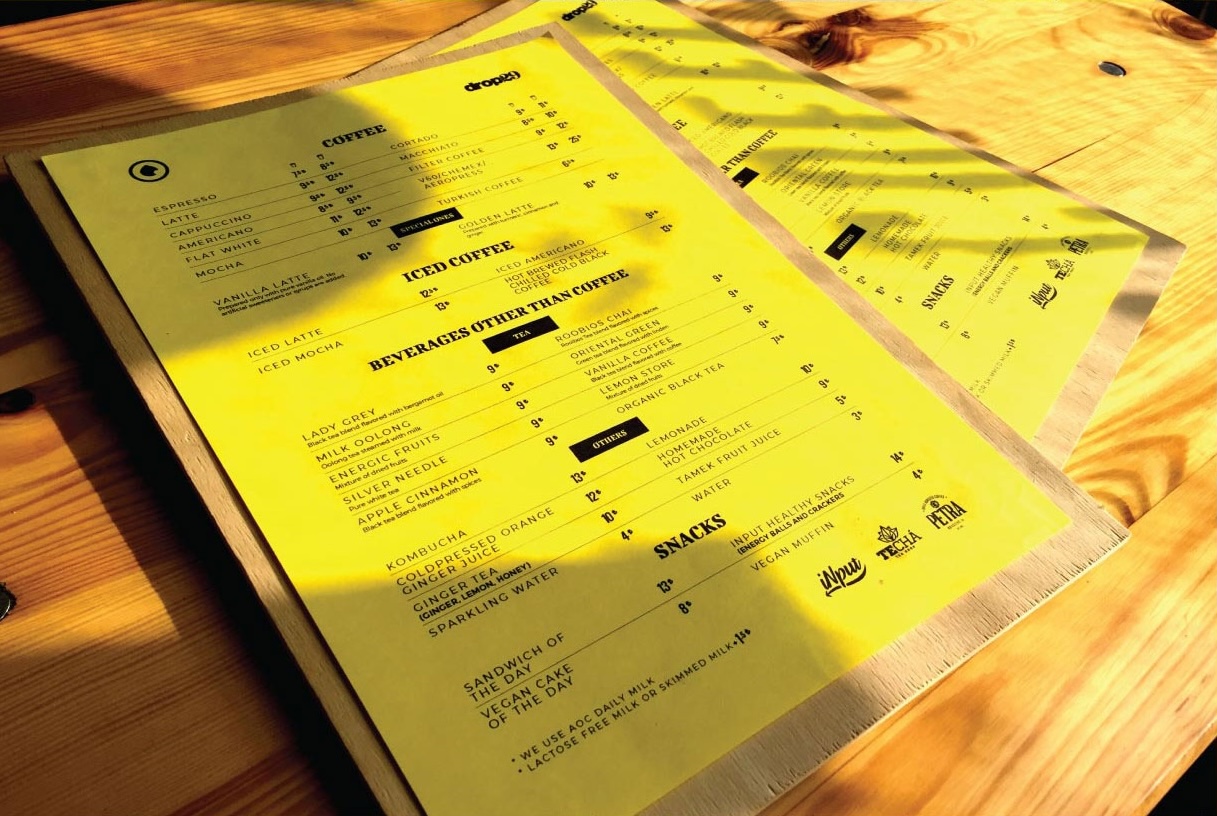
The menu, set to be read in low light at arm's length.
Fig. 02
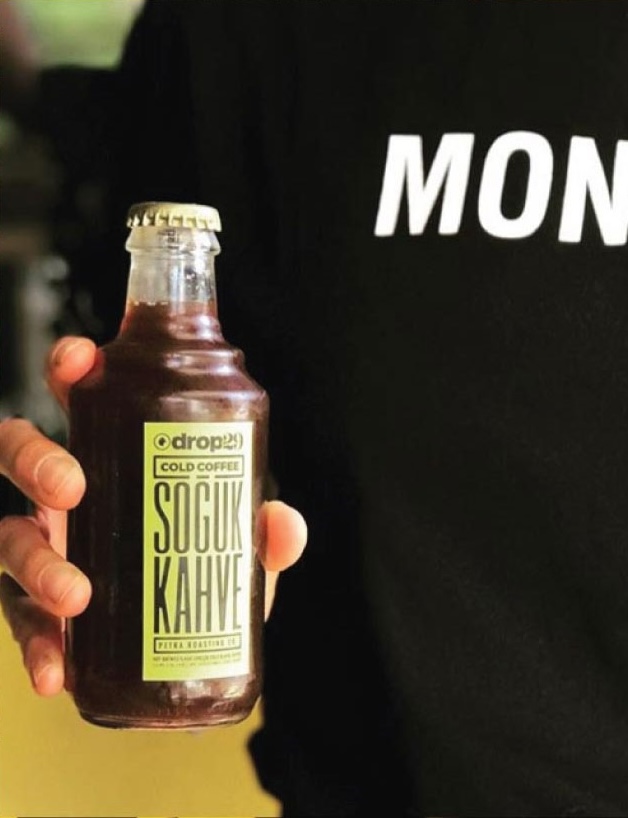
Bottled cold brew — label printed in-house.
Fig. 03
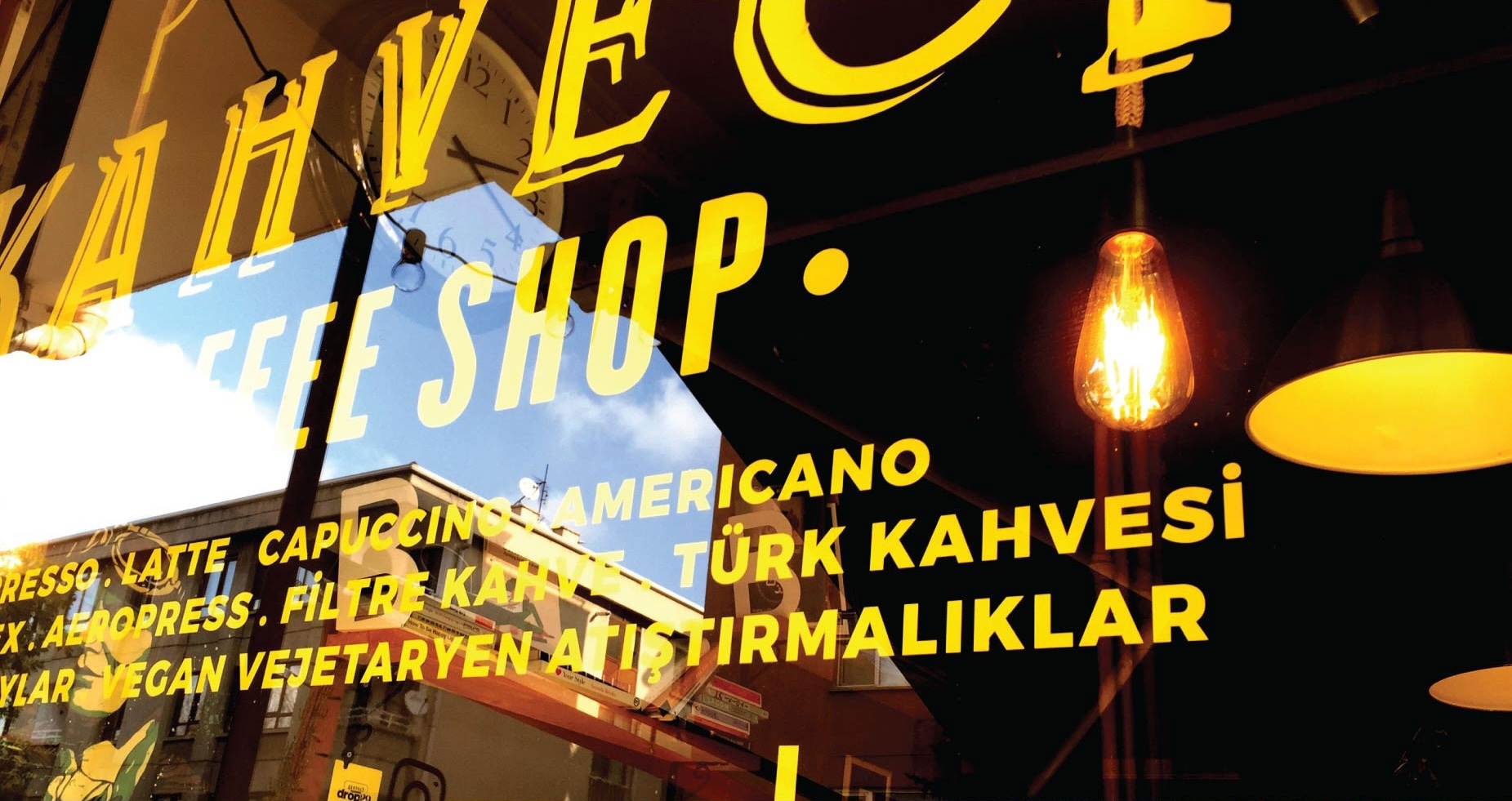
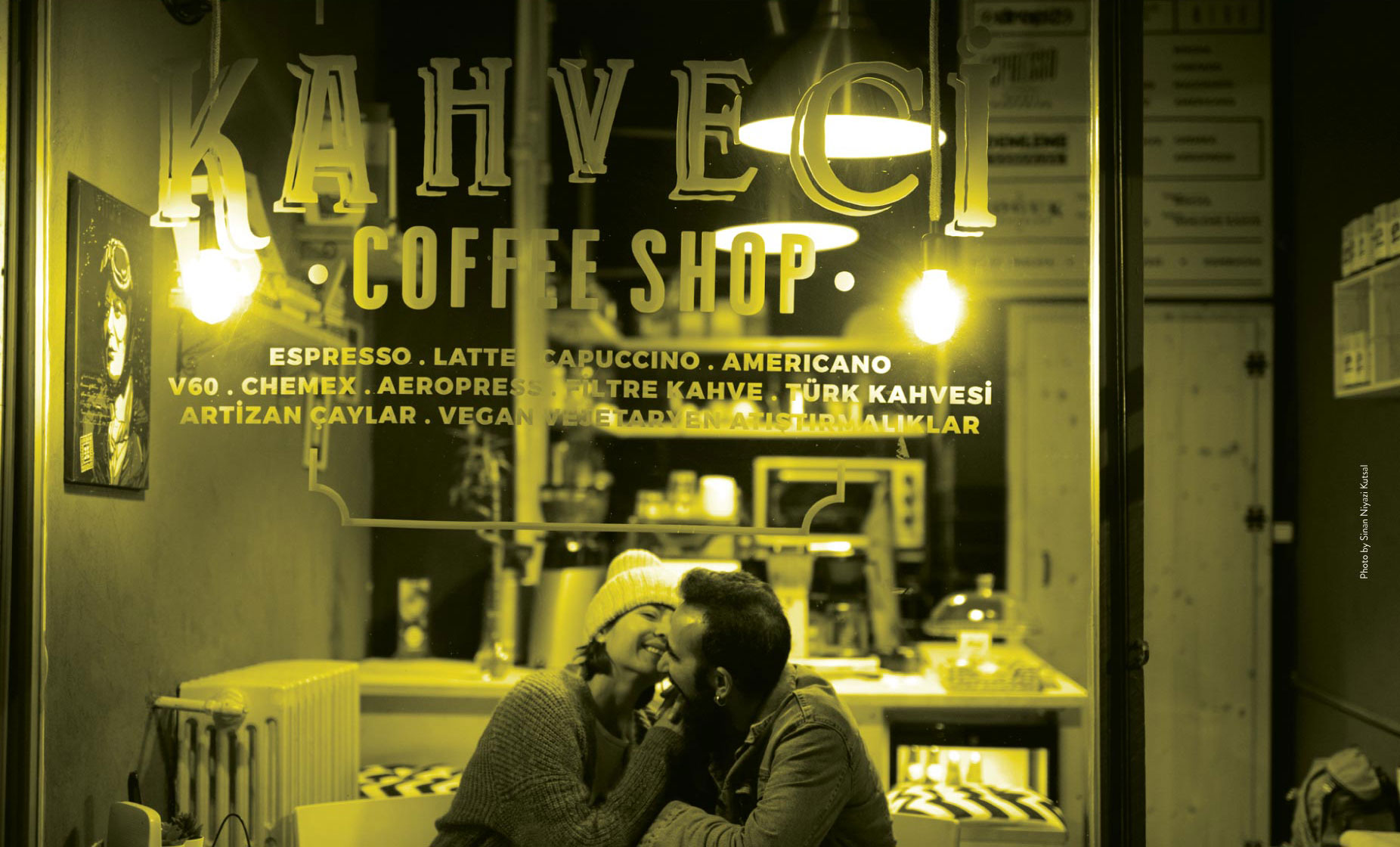
Window lettering doubled as the sign, the menu and the only advertising we bought.
Fig. 04
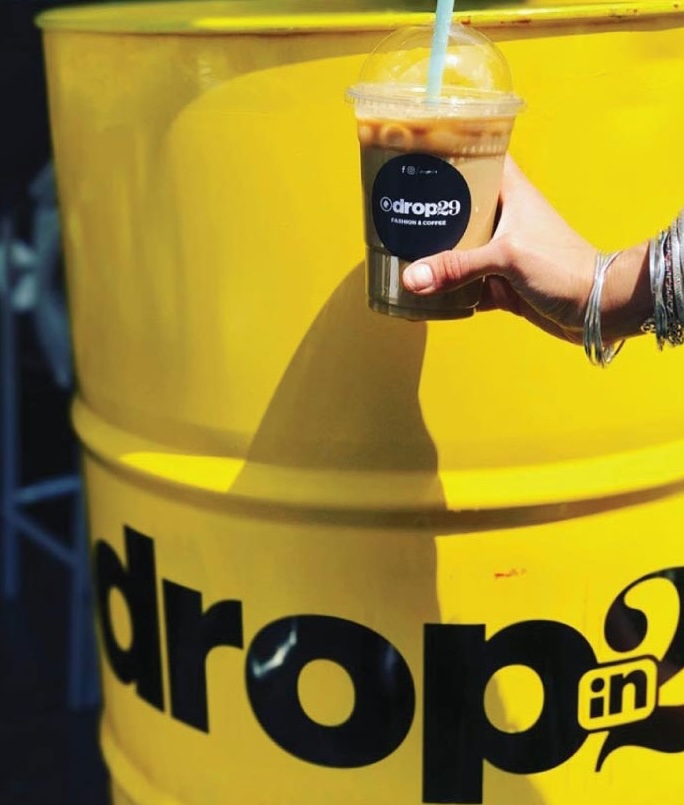
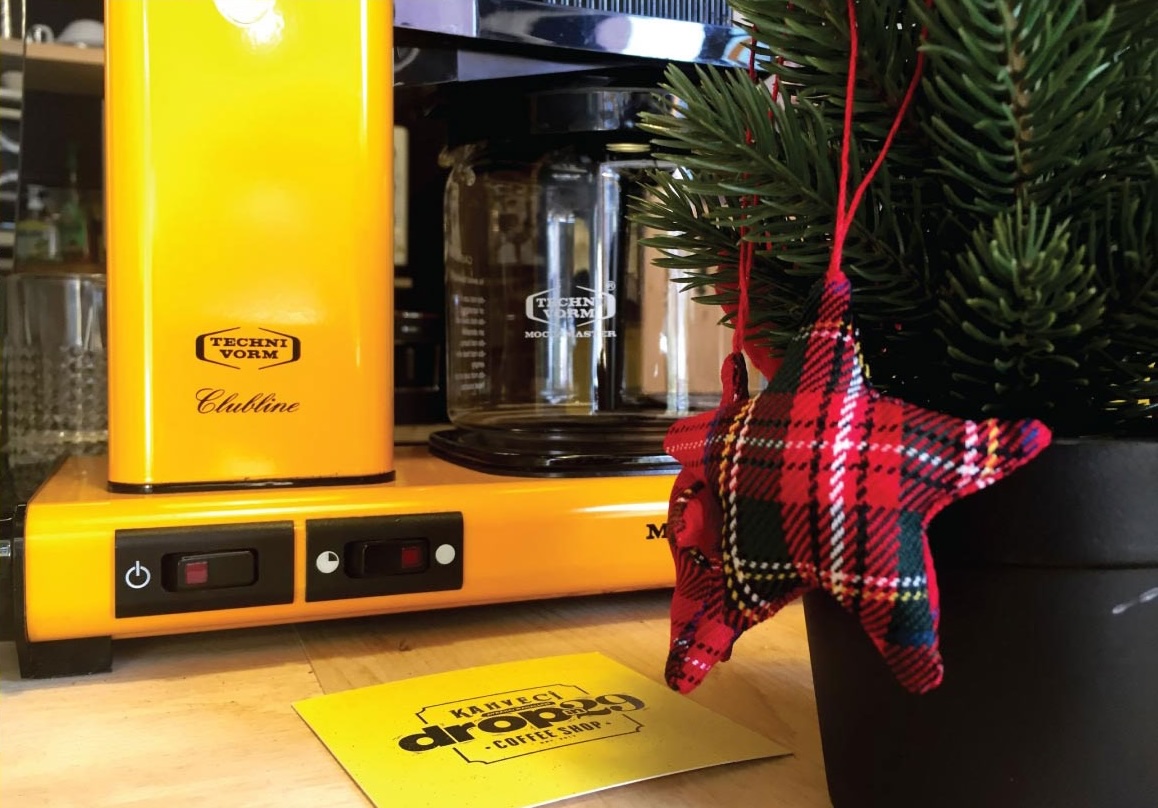
This wasn't a screen. It was a room people sat in every day, and it had to work at 16 square metres.
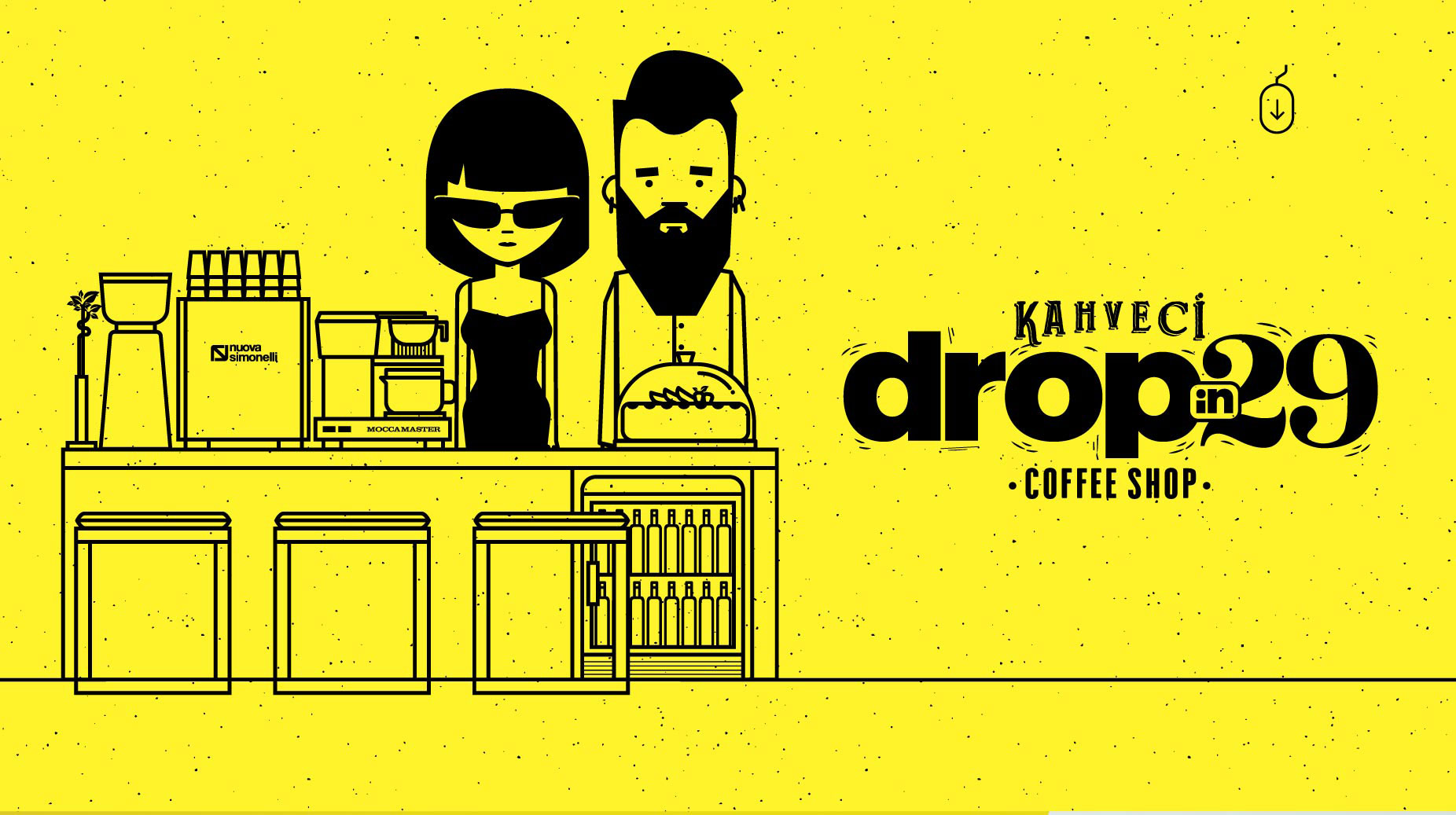
I planned the floor, hand-built the furniture, and carried one visual language from the window lettering to the cup in your hand — so the place felt like a single thing rather than a logo applied to a rental.